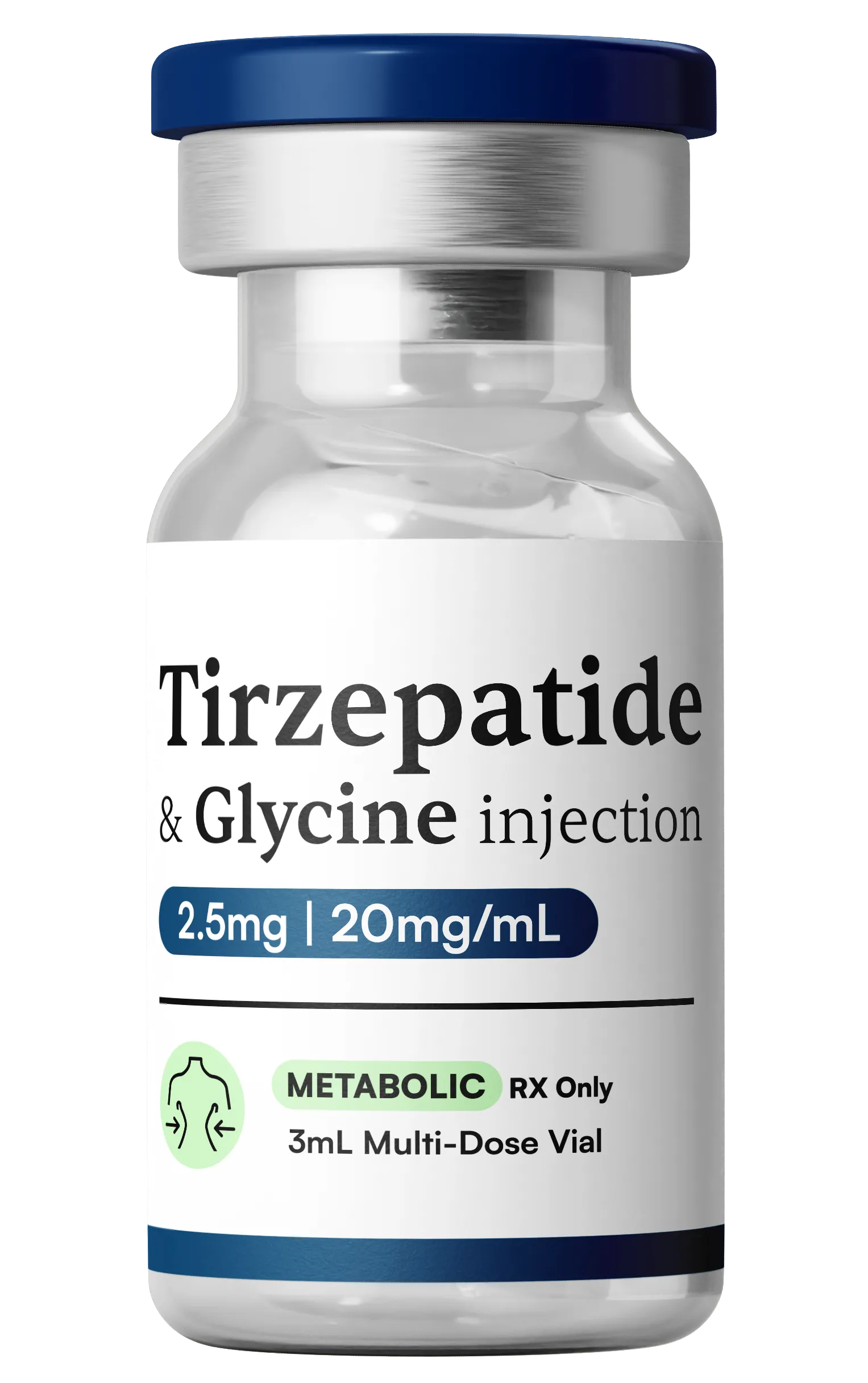
Tirzepatide Plus⁺
$144.49/month — All Dosages Same Price
Personalized GLP-2 Medication combined with B6 | Glycine
What Is NewSelf Tirzepatide Plus⁺?
NewSelf Tirzepatide Plus⁺ is a compounded dual GLP-1/GIP receptor agonist medication featuring a full dose of tirzepatide, enhanced with Pyridoxine (Vitamin B6) or Glycine to support weight loss and boost energy levels. It contains the same active ingredient as Mounjaro® (FDA-approved for type 2 diabetes) and Zepbound® (FDA-approved for chronic weight management) — produced by NewSelf's partner 503A licensed compounding pharmacies at $144.49/month for all dosage tiers.
What makes tirzepatide clinically distinct — and why it consistently outperforms semaglutide in head-to-head data — is its dual mechanism. Rather than activating only the GLP-1 receptor, tirzepatide simultaneously activates both GLP-1 (glucagon-like peptide-1) and GIP (glucose-dependent insulinotropic polypeptide) receptors. GIP is a second incretine hormone involved in fat metabolism, insulin secretion, and appetite regulation. This combined receptor activation produces a more comprehensive metabolic effect than either hormone achieves alone, resulting in greater appetite suppression, improved insulin sensitivity, and superior weight loss outcomes. Read our complete guide to the tirzepatide + B6 blend.
SURMOUNT-1: The Clinical Data That Changed Weight Loss
The SURMOUNT clinical trial program — tirzepatide's pivotal weight management studies — produced results that fundamentally changed the medical understanding of pharmacological weight loss:
- SURMOUNT-1 (NEJM, 2022): Adults with obesity, no diabetes. Tirzepatide 15mg weekly: average 22.5% body weight loss over 72 weeks at the highest dose. 91% achieved ≥5% weight loss; 57% achieved ≥20% weight loss — an outcome previously achievable only with bariatric surgery.
- SURMOUNT-2 (Lancet, 2023): Adults with type 2 diabetes. Average 15.7% weight loss — exceeding semaglutide in the same population.
NewSelf cites approximately 22% average body weight reduction. The clinical comparison between semaglutide and tirzepatide consistently shows tirzepatide producing greater weight loss, though the magnitude depends on the dose and population studied.
Tirzepatide vs. Semaglutide: Which Is Right for You?
The clinical evidence is consistent: tirzepatide produces greater average weight loss than semaglutide across virtually every studied population and dose comparison. A 2023 real-world analysis published in JAMA Internal Medicine confirmed tirzepatide's superiority in every BMI category over 12 months of treatment.
That said, "better on average" doesn't mean "right for everyone." Semaglutide (Semaglutide Plus⁺ at $99.97/mo) may be more appropriate for patients who are starting GLP-1 therapy for the first time, prefer a lower monthly cost, or whose provider recommends a first-line GLP-1 approach. Our full semaglutide vs tirzepatide comparison walks through every clinical and practical consideration.
Pricing: How Much Does Tirzepatide Plus⁺ Cost?
NewSelf Tirzepatide Plus⁺ is priced at $144.49/month for all dosages — the same whether you are prescribed 2.5mg or 15mg. No membership fee. No dose upcharge. This is substantially less than brand-name Zepbound (which costs over $1,000/month without insurance) and competitive with or below other compounded tirzepatide providers. See our detailed tirzepatide pricing guide and full cost comparison.
Confirm your checkout price: NewSelf's main homepage has displayed $224.99 for tirzepatide, while the promotional product page shows $144.49. Always confirm the exact recurring monthly charge before completing payment. Read our cost per month guide.
Side Effects of Compounded Tirzepatide
Tirzepatide's side effect profile is similar to semaglutide, reflecting their shared GLP-1 mechanism. Most common during the titration phase:
- Nausea — most common, especially during dose escalation. Evening injections and smaller meals help.
- Constipation — manage with hydration and fiber intake.
- Vomiting/diarrhea — less common; associated with rapid dose increases.
- Decreased appetite — this is the intended effect; monitor protein intake to preserve muscle mass.
- Serious but rare: Pancreatitis, gallbladder disease. Not appropriate for patients with MTC or MEN2 history.